The “Days of the Dead” horror convention is officially over and I can’t say enough about my experience. Besides rubbing elbows with werewolves and vampires, I was also able to sign books for readers and partake in some wonderful interviews, costume contests and ghoul bashes. Though I had to limit my visit to the first two days, they were a pair of days I’ll never forget. A special thanks to Aaron Tucker, John Mecha and the Sanchez Family. Please take a look at the fun interview I did with John Wroblewski on Day 2.
A Nightmare on Elm Street, Hellraiser, The Evil Dead– as a child, horror movies like these use to keep me shivering in my bed all night, fingers locked on the flashlight I kept hidden under my pillow. The stylized 80’s fear-flicks brought a new atmosphere and mindset to the horror scene. No longer was it enough to simply keep a sharpened stake under your bed or make sure that you knew where mom’s silverware was hidden. The creatures had upgraded. Now, you had to think outside the box to stay alive. That’s why, ironically, I’m thinking inside the box for this next blog. What exactly do I mean? Well, just in time for the holidays, I’ve been asked by Man Crates, a new online company that offers the most creative gifts for men in wooden crates, to put together my horror movie survival kit, and I’m basing my anti-monster arsenal on the horror movies I grew up with in order to try to make it until dawn. Firstly, let’s build the scene…
It’s the witching hour in an overly foggy forest. The moonlight cascades down below, coloring the trees and mist in a graveyard shade of blue. A pack of unsuspecting campers huddles around a fire, telling ghost stories while passing around a flask. Off in the distance, a branch cracks, and then another. Though the overly sexy female campers begin to panic, one of the foolishly brave men amongst them, Ed, decides to investigate. Recklessly, Ed goes deep into the forest line until he’s all but swallowed up by the vapors. He can no longer see the Jack O’ Lantern orange from the campfire behind him, though it doesn’t stop him from continuing his search. All goes quiet. Then suddenly, unbeknownst to Ed, a dark silhouette begins to grow behind him, taking the shape of a hulking fiend with razor claws and eyes like red traffic lights. Fortunately, as the beast closes in, its lower talons inadvertently crunch onto another branch, snapping it in two. Now alerted, Ed spins around and finds that a Lovecraft-like demon made of ethereal shadow is waiting behind him. The monster opens up its shark-like maw, and a spiral of glowing green begins to fizz in its throat, ready to be spat out onto poor Ed. Luckily, Ed has just the thing in his backpack. Hastily, he digs in a side pouch and quickly draws out a…But what does Ed draw out? A clove of garlic isn’t going to help him with the shadow terror, nor will a regular old revolver. This isn’t your typical Silver Screen antagonist. No, this creature is far more appallingly advanced, and Ed will have to have something really handy on him in order to escape the creature’s clutches. With that being said, here’s what I would prepare in my survival kit if I were in Ed’s place. They’re not necessarily deadly weapons or foolproof repellants, but they are easily attainable and versatile. Firstly, we need a diversion. The greatest ability of every monster is that they seem to always know how to sneak up on their victims, cornering them so that they have no other choice but to scream in fear until their inevitable demise (there must be a free class offered to registered horror creatures). That is, unless you have something handy which can temporarily take the sight from your stalking abomination. Unfortunately, mace isn’t going to do the trick as most creatures like phantoms and demon either lack physical anatomies or are immune to puny concentrated pepper juice. Plus, if you’re as clumsy as me, there’s a good chance you’re going to mace yourself in the process. The answer- take away their perception with the common 4th of July Smoke Bomb. Now, I’m not talking about those wimpy smoke bombs that come in kids’ fun-packs during the holidays. No, full fledge smoke bombs nowadays have vastly improved since the days of sparklers and charcoal snakes, and are relatively cheap to purchase. These bad boys are near baseball size and create a smoky diversion that when used correctly will help save your skin against any monstrosity closing in on you. Simply plan your running path a second ahead of time, light the smoke bomb, drop it, and run. And the best part is that smoke bombs tend to come in packs so even if the beasty gets past the first cloud, you can continue tossing them over your shoulder as you flee.
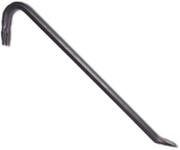
Next, let’s discuss the hard facts. Chances are you’re not looking to make a stand, but rather hurry to safety. This is not a bar brawl with Biff the college bully you’re in. These are supernatural forces that bend the rules of nature and physics. You want to fight? Goodnight. Plan to run? Survival has begun. With that in mind, let’s talk about a universal tool that will help any fleeing victim escape a horror movie attack. The modern crowbar comes in handy sizes as short as ten inches, made typically of reliable carbon steel. Though it can be used as a weapon, its most valuable asset is its versatility. Is a locked up farmhouse your only chance of surviving the animated scarecrow giving chase? A crowbar will make easy work of a door lock, buying you time to find a phone and call authorities. Did you discover that you’ve locked your keys in the car again just as the loup-garou caught your scent? A crowbar through that car window will do the trick. Plus, the crowbar makes a great crude hammer, extended arm or climbing hook (as well as a pry bar when you’re opening your Man Crate). Finally, while you might have dodged the monster’s initial ambush and survived the creature’s last pursuit, if your circumstances are in true horror movie fashion, then the beast(s) is still out there, waiting for you to lower your guard. Adrenaline may have helped you through your first encounter, but you’ll soon learn that it comes with consequences, The Crash. Your muscles are fatigued, your senses dulled, and that temporary cabin you’ve decided to take refuge in suddenly feels a bit more cozy. Not so fast. The sun isn’t up yet. It’s time for…An Energy Drink! Yes, the classic marketing beverage that relies on people’s addiction to caffeine is back again to save the day. Chances are, if you try to get some rest, the lurking specter will slip into your nightmares or the machete wielding revenant will pin you to the bed like a prom corsage. You need a boost to keep you going until dawn. Once the sun is up, you can easily navigate your way to the main road in order to get to the police station. And because America is so hooked on Energy Drinks, they now come in ungodly inappropriate sizes to keep you going throughout the midnight hours. So remember the next time you’re being hunted by a Golgothan or spirit of a vengeful ex-girlfriend, keep in mind that horror movie survival isn’t about how tough you are, but how clever you are. The brave ones die first. And as a reminder, if you’re looking for a great gift for that special Horror Movie Hero, check out Man Crates on the web, because true survivalists deserve better Christmas gifts than just a tie or cheap cologne.
Revolution, transformation, reform- for some, these words can sound sharp and lethal. But why? Well, for starters, their definition suggests change- perhaps unwanted depending on your circle. The words also insinuate that what you once depended on is no more. Nevertheless, like it or not, change is in the air.
Now I’m not talking about a change in government, religion or anything else so grand. I’m talking about a change in publishing. It’s a reworking of procedure. It’s a change in how manuscripts are published, books are reviewed, and new authors become popular. While classic publishers might tell you that the latest makeover is the beginning of the end, other, more modern thinkers would argue that its just the adjustment that the book world needs.
For years, the publishing world went something like this- a writer labors over a story. They then pitch it to an agent. If an agent agrees to represent them, they propose the manuscript to a publisher. If the agent is talented enough, the publisher agrees to publish it, and depending on the book’s popularity, eventually a newspaper or radio show might review it, helping the book earn additional readers. The cycle repeated itself for decades, and only the strongest survived.
With modern technology, and a little something called the “internet”, things have changed. Authors can now submit their work to certain publishers without representation, or elect to publish it themselves. If a pitched publisher decides they like the manuscript, they contract the work, with an emphasis on sales instead of advances. Bloggers and other readers then write reviews for the work on social media sites and if enough followers and fans enjoy the book, an author can expect a better chance at publishing their next manuscript.
Where once a writer was forced to depend on the system, the ball is now in their court. It’s no longer about crossing your fingers as much as it is effort and determination. If you want to publish a book, you obviously need to still be a great writer (some would argue even more so now), but you can also take hold of the business side if you’d like. And while many classical publishers would argue these new methods have helped destroy the publishing world, the final numbers don’t favor their mentality.
Take for example the latest column in Yahoo News’s The Exchange. According to columnist, Aaron Pressman, while certain publishers and bookstores are on the ropes, the sales of ebooks are at an all time high. Take for example a consumer report that studied electronic book sales throughout the last decade. While ebooks started as a 68 million dollar industry, in 2012, it improved to an all time high of 3 billion dollars- the most that the publishing market has ever seen. In addition, this study is only focusing on published ebooks. It does not include the countless self-published works that consumer reports have difficulty tracking.
Now take in to consideration that in 2012, hard and electronic copies made a combined total of over15 billion dollars. This sales milestone is not only record breaking, but also a forecast in the rising numbers we can expect to see in the future. When added up, you quickly realize that while the procedures for producing books may have changed, the publishing world is by no means at an end. So why the bad blood?
Well, for every action, this also an equal or greater reaction, and the latest practices are no different. Publishers fear the change in publishing procedures gives way to monopolies like Amazon cornering the market. Publishers also fear that they’ll be held prisoner by ebook sales, which eventually may have more demand, but will sell for much cheaper. Most importantly, small publishers, self-publishing, and online book websites take the power out of the publisher’s hands. Major publishers can no longer dictate the rules of what is and isn’t a good book, and what they’d like to push onto the market. It gives a bit more power, perhaps only temporarily, back to the writer and reader.
Now to add the final piece…my half-witted opinion. Paradoxically, though I might sound like I’m siding with the change in atmosphere, I’m not. I’ve always been a firm believer in hybrid solutions, and the recent publishing change is no different. Do I think that the classic method of publishing is outdated? Of course. Do I want the domination of the book market to simply change hands to companies like Amazon on Kobo? Heck no. The truth of it is though, while I’d personally love for mid sized publishers to regain power and start signing authors due to talent and promise, I know that there’s a lot of work in order to get it to that point. In the end, what I’m actually trying to say is that like it or not, the publishing world is changing.
So, this Fifth of November, when some of us celebrate Guy Fawkes Night, a commemoration that celebrates the failed attempt to blow up British Parliament, why not ask yourself if change is really so bad? In the publishing world, it seems to be inevitable. Let’s hope that with a little bit of care and effort, readers and writers alike can take back the publishing world. If we can embrace the change, then we can use it in order to make sure that publication is no longer an activity that one is powerless to control. It can be change that we use to our advantage- a change that we remember.
I’m not sure about the intelligence of Amazon’s suggestion-engine, but it what cool to see the below e-mail this morning (see attached picture). On that note, if you haven’t already, I’d greatly appreciate it if you went to my book on amazon and reviewed it if possible. This will be my only shameless blog-post about the subject, but unfortunately, amazon reviews tend to have strong influence in our modern day publishing world.
Ah, October, the best month in Chicago by far. Why might you ask? Well, that’s easy. Not only does it bring forth the most beautiful of seasons, autumn, and not only is it the month that my wonderful wife and I were married, but for thirty-one days we prepare ourselves for one of the best holidays in the world, Halloween. Every year, just about the time when the scary decorations are put on store shelves, a certain spark erupts in my belly, waking me from my slumber like some revenant crawling out of its grave. Sugared thoughts of frightening costumes, spooky lawn decorations and haunted attractions stir in my mind as I watch ghost shows, drink Octoberfest brews, and reread the classics such as Poe, Stoker and Shelley.
It’s also a peak time for me as an author. It’s as if my fingers are starved to devour the keyboard in order to spin tales that make blood curdle and spines tingle. Countless monsters are born, and even more victims slain across the pages of my works during this wonderful season. Yet, for as much as I could spend countless hours talking about my relationship with the holiday, babbling about the fire that Halloween lights under my cauldron, the excitement of it all also begs another question, one more so related to writing. What is it that makes writers tick?
Some writers are just always on. For them it’s a gift. They have this endless well of ideas and inspiration that allows them to constantly create at anytime, anywhere. For the rest of us however, creativity takes energy, stimulation and motivation. Even the most prolific writers of all time had habits that helped them create their best works. For T.S. Elliot, not only did he sneak away to a quiet porter’s lodge to write, but he also did so while wearing green ghoulish makeup that made him feel like a cadaver. For Faulkner, he wrote his bet works only after a glass or six of whiskey- the good stuff mind you. And as for H.P. Lovecraft, the man of weird fiction could only pen during the darkest hours of night in order to invent his Cthulhu mythos or legends of the Necronomicon.
So what is it that makes you excited to write? Perhaps it’s being somewhere special or reading a book that encouraged you to write in the first place? Being a writer, be it poetry, journalism, fiction, nonfiction, blogging, can be extremely challenging. What takes most people seconds to read may have cost you hours to write, and in those hours, you probably had to drive yourself to stay motivated. Sometimes it’s easy, but often, we must dig down deep and sip from that inspirational well that keeps us excited to create.
Recently, I read an article that had surefire ways to keep a writer motivated. In the column, there were tricks like creating tight deadlines, removing distractions, and forcing yourself to pen even when you were exhausted. While I agreed with what the author was trying to express, their suggestions sounded more like punishment than inspiration. Writers shouldn’t have to physically or mentally abuse themselves in order to create a great story, poem or blog- it’s quite the opposite.
Ultimately, all that we have to do is remember that writing is different for everyone. Simply know yourself, know what keeps you ticking, and use it to your advantage. Anything else is subjective.
So writers, the next time you are having trouble finishing a story, completing a blog or finding that last line of a poem that would really make your work feel complete, remember what makes you want to write. Go back and read your favorite book, visit that place that makes you feel alive, or in my case, listen to Halloween music in the middle of April. I think that you’ll find it truly works. Because so long as you find what makes you tick and continue to feed it, you’ll also find that you’re often writing your best works.
$10 ENTRY FEE. The winner will receive publication in The Feminist Wire and $200. The 1st runner up will receive publication in The Feminist Wire and $100. Deadline October 1, 2014. Submit up to 3 poems (no more than a total of 5 pages).
One of my favorite songwriters and artists is no doubt Tom Waits. He’s witty, dark, and can write one hell of a melody. No doubt, his lyrics are sometimes cryptic, often with numerous meanings, but the guy really knows how to deliver a catchy tune. Get Behind the Mule, is a song from his “Mule Variations” album that has really stuck with me throughout my writing career. While the entire song is a bit grim, his chorus is something that always stirs in my head whenever I’m having trouble motivating myself to write for the day.
“Got to get behind the mule-
In the morning and plow.”
The line repeats itself several times throughout the song, delivering a haunting, but sensible message. Sometimes, you just have to pull your sleeves up and get the job done even if it’s the last thing you want to do. It’s easier said than done I know, but nonetheless, valid. If you’ve entered the book writing world hoping for an easy publishing process with minimal complications and easy, no mess acceptance, you’re probably not being realistic. Publishers are extremely particular, and will ferociously pick apart your manuscript to the last word. That’s because they have to be in order to do their job.
The trials are exhausting and a bit demoralizing, but you can’t let them break your formula. Read and write every day, send out your manuscript, and continue to stay focused. These are the steps that will eventually get you published. A lot of times we forget this because we don’t want to admit that it’s tougher than we’d thought. It’s okay. Long waits, rejection letters, and criticisms are part of the game. Don’t let it stop you from being productive. Got to get behind the mule in the morning and plow.
Eureka! You’ve just finished your first book and are now thinking, “How do I get published?” After months of blood, sweat, and tears, you go online and begin investigating. Sadly, after researching a slew of websites, not only are you utterly confused, but also feeling as if you’re at step one all over again. Some experts say you should self publish. Others suggest that you find a company to push your book. They warn about shady agents, introductory no-no’s, and coordinating the perfect pitch letter. With so much information out there, who should you trust? Well, its times like these when the only thing to do is go directly to the source. Luckily, I’ve had the privilege of speaking with an experienced author in order to find out how a new writer can best get published.
William J. Wagner is a sports journalist and author of Wrigley Blues. The Herald and Review praised him as, “A veteran sportswriter,” while Sporting News described his acclaimed work as, “A wonderful book.” He has over thirty years of writing experience and has been published in numerous sports journals and magazines. William was kind enough to take the time to answer some frequent questions that upcoming writers typically have. He touched on everything from the publishing market to industry standards.
Firstly, William warns that just like anything, if you’re not passionate about writing, it’s not worth it. Most published authors are never truly compensated for the amount of time and effort that they put into their work, so writing to earn your fortunate tends to only end in disappointment. In fact, with traditional publishing companies scaling back, and an overabundance of new writers flooding the market, the chances of turning your manuscript into a profitable best seller is ever shrinking. However, if you genuinely just love to write, William suggests keeping at it. It may sound cliché, but somewhere out there, people want to read your book.
Next, Wagner suggests striving to sign with a publishing agent before trying to get your book out to readers electronically. While eBooks are the future, the chances of your first manuscript becoming successful in this way are remote. And though some people like to bring up the few thriving independent eBooks such as Fifty Shades of Grey, the majority of readers support established household names over “Indy” writers any day. According to William, the best way to get your manuscript picked up is to hire a literary agent. Literary agents, the good ones at least, can be found online and should never ask for payment up front or editing fees. Those who do, tend to be profit mongers, and want nothing more than to take your money, but not before possibly tarnishing your good name. If you insist on trying to get your manuscript out yourself, William suggests that you at least employ an agent to submit your work to major publishers (who usually refuse to look at a piece without the sponsorship of a literary agent), while promoting your manuscript to smaller publishers within your genre (who generally don’t demand representation).
Finally, William highly urges writers to perfect their pitch letter. Most publishers receive hundreds of manuscripts a day, and only choose to delve further depending on the strength of the pitch letter. Wagner suggests a clean and concise letter that summarizes your story. He also recommends giving examples of popular books that are similar to your work. Most publishers are looking for something they can market. While your manuscript may be looked over a dozen times or so, continue believe in your work. More often than not, if you have a great pitch letter and a well polished story, there’s a publisher out there who will eventually be interested.
William also makes mention that inspiring writers today have far more challenges than writers ever have in years past. With so many more self publishing opportunities, a surplus of competitors, and a manifold of schemes that prey on unsuspecting penmen, it’s no wonder that so many struggling writers throw in the towel before they ever become established authors. High hopes quickly become lowly and deflated. However, if you can follow the delicate process suggested for first time writers, and are both patient and optimistic, your chances of signing that first contract will significantly increase. So, while it may be humbling, new writers need to remember that from small beginnings come great things.
(William J. Wagner’s highly acclaimed book, “Wrigley Blues”)
I read a lot of authors’ blogs and one of the hot buttons tends to be a debate over promoting your book. Some authors feel that they should concentrate solely on writing their book so that it’s at its best, while trusting their publishers to take care of the rest. Other authors feel that using social media, going on blog tours and attending conventions is the foundation of having a successful novel. Some blogs say that trying to be a salesperson dents a writer’s reputation while other post that self promotion is half the battle. Its two different schools of thought. So which is right?
Well, it wouldn’t be a heated debate unless both sides didn’t have excellent points. Traditional authors feel that a writer’s responsibility is to spend hundreds of hours of blood, sweat and tears trying to perfect a manuscript that they pitch to a publisher to sell. By accepting the book, a publisher is saying that they feel that they can market it to the correct audiences in order to make a profit. So why would you get the author, who knows nothing about selling, involved? That’s like asking them to work on a car for you or fix your plumbing. Sure they’ll give it a shot, but writers tend to be lacking in marketing skills. They specialize in telling stories.
A publisher by definition is supposed to make information available to the public. That includes all of the stages of development including acquisition, editing, graphic design, production, printing and most importantly, marketing. You write, they excite. While a publisher might expect you to show up for a few promotional appointments, they shouldn’t rely on an author to turn a book into a success. That should be something that they deploy.
On the other hand, while it might be the responsibility of a publisher to help sell your book, why wouldn’t you try to help your own cause? While there’s conflicting numbers that don’t exactly prove or disprove if blogging truly helps sell books, I can tell you from personal experience that connecting with readers never hurts. I’ve seen multiple well written blogs that inspire me to continue following the author. And yes, while using Twitter, Facebook, Goodreads, etc. might not drive sales, it’s a great way to understand what people enjoy while keeping your name out there. Plus, it helps target specific audiences.
Publishers are great at selling a manuscript to the general public, but they tend not to concentrate on specialized groups. Blogs, social media and focused tours are a great way to aim at an audience you’d like to cater to. For example, if I’m writing a horror novel (cough, cough, “Consumed” is in on bookshelves October 2014, cough), I might want to promote my novel to gothic book clubs, ghoulish citywide conventions and anywhere else that there’s horror readers. Promoting to people who tend to read your specific genre not only theoretically pushes sales, but it also assures better reviews. Readers of a certain style might be a bit pickier, but they also tend to appreciate elements within your writing far more than a person who just picked up any book at the airport to get them through their flight to Los Angeles.
So what does it all mean then? Should you promote or shouldn’t you? Well, although my word isn’t an official authority, I’d have to say that both schools of thought are on the right track. Yes, I’m calling it a draw. While it’s true that an author’s book should be their priority, and that being weighed down by book promotions can be a serious distraction, getting involved in endorsing your own manuscript is vital.
Managing time is tough. If you’re an early phase author who still has a day job, it’s probably even tougher. An author with a publisher has to make sure that they are spending a majority of their time working on their manuscript while allowing ample time to promote. The rule of thumb tends to be that the smaller the publisher, the more time you may want to invest in pushing your book. I’m not saying that you have to stretch yourself thin, but the occasional blog, Twitter comment or Goodreads update helps.
However, if you feel that you absolutelypositively do not have enough time to both write and promote, it’s my suggestion that you abandon ship with the marketing segment. While you may be able to help, it’s ultimately the publisher’s responsibility to get the word out that your amazing book is coming soon. Your publisher can promote without you, but no one can write the book but you. Might I warn though that this is only for rare cases. In my opinion, most people, if they’re really honest with themselves, can find the time.
So the next time you’re worried about the success of your book, ask yourself, “Am I doing enough to help?” You’ve put a lot of effort into your novel. Encourage readers to buy it. It doesn’t mean that you have to treat it like a second or third job, it just means that you should put a small amount of time away every week to ensure that you’re giving the book the attention it deserves. Remember, you only get what you give.


 Justin Alcala: Check Out More Blogs, See Future Work & Pick Up My Horror Novel @:


 Justin Alcala Writes