Consumed: Concept Art, Round 2

Hi all,

Here are some other great conceptual designs created for the upcoming Victorian Thriller,”Consumed.”

www.justinalcala.com

Let us know what you think!?

Detective Sergeant John Davis
http://i740.photobucket.com/albums/xx42/burt_reynoldz_mustache/burt_reynoldz_mustache089/Davis_zps6018079e.jpg
The protagonist’s unlikely partner, and perhaps most questionable support character.

Marcos “The Great Mago” Biachelli
http://i740.photobucket.com/albums/xx42/burt_reynoldz_mustache/burt_reynoldz_mustache089/TheGreatMago_zpsb48b54c3.jpg
An ex-criminal, and Nathan’s friend, “The Great Mago” helps Nathan with his research into the supernatural.

Chief Inspector Donald Swanson
http://i740.photobucket.com/albums/xx42/burt_reynoldz_mustache/burt_reynoldz_mustache089/ChiefInspectorDonaldSwanson_zps4b6c4daf.jpg
One of the only historically “real” characters in the novel, Swanson is not only the protagonist’s direct supervisor, but one of the investigators of the Ripper Case in real life.

“The Soldier”
http://i740.photobucket.com/albums/xx42/burt_reynoldz_mustache/burt_reynoldz_mustache089/TheSoldier_zpsced7f786.jpg
Timothy Dewhurst, also known as “The Soldier” is an army veteran and obsessive gambler. His lifestyle is less than ideal, but he tries to be a goodman nonetheless.

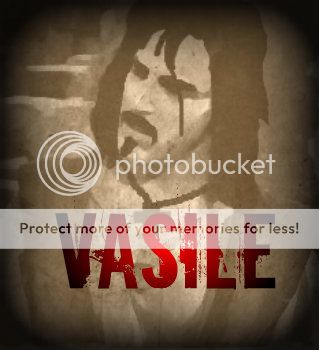
Vasile Ivanescue
http://i740.photobucket.com/albums/xx42/burt_reynoldz_mustache/burt_reynoldz_mustache089/Vasile_zpsd632cc20.jpg
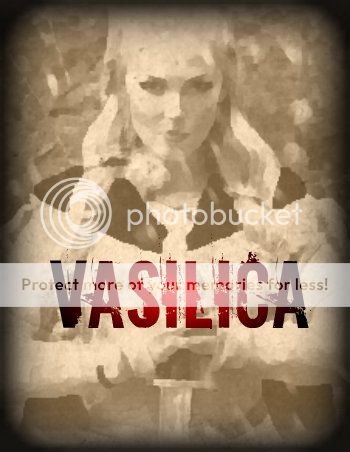
Perhaps one of the most frightening characters, Vasile is a witch hunter from Romania, who along with his sister, has traveled to London in order to follow their latest mark. Is he righteous or foul? Nathan can’t be sure.

Review: Grasshopper Jungle

If you ever want to understand the true nature of a teenage boy during a hyper-pubescent time in his life, this is the book for you. Oh, also add the apocalypse into the mix.

For those of you who are thinking about picking up this novel, please do. It’s a coming of age story about a small town Polish lutheran boy named Austin who is uncertain about life, his sexuality, and the future that awaits him. However, in the background, slowly but surely, there is an outbreak that is causing the local town folk to become sick and transform into massive coldblooded mantis-creatures. Together with his girlfriend, Shann, and his best bud, Robby, the group investigates the infestation while also exploring Austin’s internal conflict.

Grasshopper Jungle is not your traditional book. It is a first person account that rarely stays on one subject. The narrator hops back in time, tells short jokes, gives history lessons, and then lets you know his current level of “horny”. The author’s raw and slapstick sense of humor had me laughing throughout the book, and his point of view on historical figures (no one ever shits), adulthood, and growing up was delightfully entertaining. I’d definitely recommend this book to anyone who isn’t intimidated by a book with edgy subjects, as there are a few hot buttons.

All-in-all, this is a great read if your looking for weird and hilarious.

Creativity, Nature or Nurture?

Is creativity something that we’re born with or is it something we learn? It’s a question that people in art based fields often ask themselves. Studies by major universities show that people who tend to be more creative have different biological characteristics than those who are not. But not everyone is convinced. Some studies argue that creativity is a renewable resource that can be taught, enhanced and fueled, just like any other skill. So, is it nature or nurture? Let’s use myself as an example to delve into the subject and investigate whether the artistic drive inside of you is a gift of evolution or simple upbringing. 


My mother was a very talented artist in the late 60’s and early70’s. She had painted canvases spread across her bedroom, sketch pads stored in stacks throughout our basement and framed photographs of her old art studios inside her office. Even as a boy, I remember asking myself, “will I be like mom (or as we say here in Chicago, ‘ma’)?” As I think back, I don’t recall her ever sitting me down and teaching me how to paint or tell stories, yet as I continued to grow, I learned that I had quite the knack for drawing and writing.  Kids in grammar school use to come to me all the time and ask if I could help them sketch a picture or think of a story idea for a school assignment. To be honest, I never gave it much thought until I decided to pursue my career as an author. Now though, I often wonder, did I teach myself to be creative, using my mom as a guide, or was it something innate that helped me become the fairly creative man I am today?


                According to researcher Kenneth Heilman of the Department of Neurology and Neuroscience at Cornell University, I never really had a choice. Kenneth discovered that the brain is divided into two halves that are joined by fibers called the corpus callosum. Writers, artists and musicians tend to have smaller corpus callosums, which allows each side of their brain to communicate better, creating new ideas and associations more easily. Kenneth found that people with this phenomenon benefit through an incubation of ideas that are critical for the divergent-thinking component of creativity. So for Keneth, my brain is just wired that way due to my small corpus callosum (hey, size isn’t everything).


Meanwhile, researchers at the University of Helsinki conducted a similar study associated to musical creativity. In their extensive assessment, they found that musical creativity is based on one’s natural ability to judge pitch, as well as the coordination of beat and harmony. It’s the brain’s inherent ability to reorganize information that makes one a great musician. This explains why so many musicians like Mozart had successful careers at early ages. It has always been in their DNA.  


On the contrary, according to Tina Seelig, the Executive Director of Stanford’s Technology Ventures Program, I, like any other creative person, slowly learned how to be as creative as I am. Through her studies, Tina has learned that creativity is a part of the “Innovation Engine”, a set of skills that can be improved by anyone with the right mindset. In Tina’s eyes, creativity is the process of creating new ideas, something that anyone can do if they just learn to think beyond the obvious. There are hundreds of paths, some easier than others, that can help you sharpen your creative skills. Through her studies, Tina has learned that we are all naturally creative, and like any other ability, some people may have more natural talent. However, it doesn’t mean that others can’t be just as creatively proficient. All they need to learn are techniques that help enhance their capacity. Much like speed reading or rollerblading, it’s a skill to be honed.


                So which is it? While I want to believe that artists, much like Jedi or Hogwarts wizards, are biologically chosen to become who they are, I have to say that I have a hard time buying into that mindset. People aren’t just packaged in gift wrap and a bow, creative as they’ll ever be at birth.  No, it seems to be something that slowly develops. Nonetheless, I have to admit that I’ve also met some pretty amazing artists within my day that didn’t do anything different from friends and colleagues when it came to improving their talent, yet they somehow managed to be twice as gifted as others when it came to painting, writing music, or sculpting. Maybe they’re just lucky?


                Regardless, for me, it’s hard to agree with any blanket statement which states that creativity only has one explanation like genetics or daily practice. In my eyes, creativity is more than just what scientists can put under a microscope. Yes, it’s a combination of biology and skill, and yet it’s still something more. It’s an orchestra of experience, cleverness, inclination, dreams, love and chance. It’s a desire to make people happy with your work and a satisfaction that comes with conceiving something all your own. That’s something that you just can’t put into one from of scientific rationalization. Does that sound mawkishly sentimental? Perhaps. Still, it’s something I live by.


                Through this short blog, we’ve studied what some experts have to say about creativity, using me as an example. But what do you think creativity is? When you examine who you are, can you explain it? Were you born with creativity or is it something that you were taught? Is it understandable or unexplainable? We as readers and writers sometimes forget that we live in a pool of creativity each day. Every blog you post or article you read is someone’s creativity put into motion. Maybe it’s time you take a second to ask yourself how you became the creative wonder that you are.


SEE THE FULL ARTICLE:

The Guardian, “Are Some People Born Creative”: http://www.theguardian.com/science/blog/2013/sep/19/born-creative-study-brain-hemingway

Business News Daily, “Who Says Creativity Can’t Be Learned”: http://www.businessnewsdaily.com/2471-creativity-innovation-learned.html
Everyone Has an Opinion

          Whether your blogging fan fiction or working on the next award-winning novel, chances are that if you’re working on a new literary project, you’re also receiving insight from others. It may be a simple suggestion from a loved one or serious recommendations from your editor. Regardless, opinions can make or break someone’s writing. So how do you know what advice is valuable and what advice should respectfully be declined? Some might say it’s a matter of the author’s style, while others would argue that you need to scrutinize your counselor’s merit. Then there are those who say that if you truly want to write your best work, you shouldn’t take anyone’s opinion at all. So, let’s examine.

           Plato once said, “Opinion is the medium between knowledge and ignorance.” The distinction that he was trying to make is that opinion is subject to error while knowledge is not. There’s nothing wrong with taking someone’s opinion into consideration. Just read the dedication part of a book and you’ll find a whole slew of authors thanking their family, friends and editors for their advice. It’s proactive to ask for different viewpoints, especially ones that come from those of whom you have a great amount of respect for. However, one thing that a writer needs to keep in mind is that one person’s advice, as creative or thought provoking as it might be, may not cater to your readers’ demographics. The fact is, although someone might offer a fun suggestion, like your main character switching sides at the last minute of the book without prior foreshadowing, statistically- people prefer clues for surprise resolution.

            It’s the responsibility of the author to determine whether a suggestion matches the writer’s style. If a writer wants to create something new and fascinating, it might not be a terrible idea to get the opinion of someone who thinks outside the box. Dozens of writers have advisors on standby who are constantly helping them develop their works in new and original ways. However, if a writer already has a steady plot for a specific genre, and an outsider’s opinion conflicts with the outcome, it might be in the author’s best interest to make choices that cater to their fans instead of their counselor. Neither technique is wrong. It’s just a matter of methods, standards, and goals.    

            Another question that a writer needs to ask themselves is, “Who exactly is giving me this advice and why is it wise to listen to them about the direction of this piece?” You might find that although someone is extremely intelligent, they may not be qualified to help with a specific area of your work. You might not want to ask a historical non-fiction writer about whether the dragon in your fantasy novel should be able to transform into a human, nor may you want to ask a comic book fan if the nemesis in your plot should be more behaviorally realistic. They may have great insight, but their background can sometimes be conflicting. So make sure that the advice giver is the right person before making any drastic changes. Sometimes, it’s simply a matter of not wanting to turn down their advice. It’s much harder to say no thank you than it actually is to actually identify a bad suggestion, but make no mistake, you’ll eventually have to.  

            Then there are those who think that taking the advice of others can be an error. According to New York Times Best Selling Author, Joseph Finder, “The most successful writers aren’t the most talented. They’re the most stubborn.” If you have a method to your madness, don’t deviate because of a colleague or loved one’s opinion. Let your system be your system until it fails. Suggestions are a great way to get a new perspective or to make decisions about tough choices in your writing. Nevertheless, if you don’t want anyone’s advice, honestly, don’t take it. Keep in mind, I’m not telling you to be an immovable curmudgeon, but some authors are more instinctively in tune with their readers than others, and if you’re one of these lucky individuals, no need to listen to other’s suggestions. 

In the end, writers need to understand that writing is subjective. You’re always going to get conflicting opinions about your subject matter. There’s nothing wrong with that. Often, this can lead to us improving our work. But it’s the duty of the writer to understand which opinions are constructive and which are merely personal preference.  As a rule of thumb, a writer should remember that they’re catering to a broad audience. If there’s an idea that the author is on the fence about, they need to ask themselves, “What would my readers prefer?” On the other hand, if what you’re doing is already working, take those suggestions and throw them right out of the window.

            So, ironically, here I am giving my opinion. For the sake of playing devil’s advocate, I ask you, do you want to take my advice or do you have a better suggestion?

Get Behind the Mule

One of my favorite songwriters and artists is no doubt Tom Waits. He’s witty, dark, and can write one hell of a melody. No doubt, his lyrics are sometimes cryptic, often with numerous meanings, but the guy really knows how to deliver a catchy tune. Get Behind the Mule, is a song from his “Mule Variations” album that has really stuck with me throughout my writing career. While the entire song is a bit grim, his chorus is something that always stirs in my head whenever I’m having trouble motivating myself to write for the day.

 “Got to get behind the mule-

In the morning and plow.”

 The line repeats itself several times throughout the song, delivering a haunting, but sensible message. Sometimes, you just have to pull your sleeves up and get the job done even if it’s the last thing you want to do. It’s easier said than done I know, but nonetheless, valid. If you’ve entered the book writing world hoping for an easy publishing process with minimal complications and easy, no mess acceptance, you’re probably not being realistic. Publishers are extremely particular, and will ferociously pick apart your manuscript to the last word. That’s because they have to be in order to do their job.

 The trials are exhausting and a bit demoralizing, but you can’t let them break your formula. Read and write every day, send out your manuscript, and continue to stay focused. These are the steps that will eventually get you published. A lot of times we forget this because we don’t want to admit that it’s tougher than we’d thought. It’s okay. Long waits, rejection letters, and criticisms are part of the game. Don’t let it stop you from being productive. Got to get behind the mule in the morning and plow


Are Writers Artists?

What comes to your head when you hear the word artist? For the majority of people, it’s usually Picasso attacking a canvas or Bob Dylan playing his guitar. Very rarely does someone imagine Mark Twain or Agatha Christie in front of a typewriter, regardless of the fact that they are the most prolific authors of all time.  So, why aren’t writers typically considered artists? Does one have to cater to the five senses in order to be one, or is it the emotion one stirs from their work that makes them what they are? Well, as usual, the answer isn’t simple, but requires exploration nonetheless.

Type “what is an artist?” into your web browser and see what comes up. I did, and the first definition I came across was, “An artist is a person who creates paintings or drawings as a profession or hobby.” Wow, it doesn’t get any simpler than that. Other definitions include, “A person who is skilled at drawing or painting,” as well as, “a skilled performer.” So, according to Webster and his friends, a writer is definitely out of luck.

As I continued to search, I found blogs and comments that support the idea that writers just are not artists. Certain opinions genuinely believe that authors, as talented as they might be, don’t fit the mold of what an orthodox artist should be. From these people’s perspectives, artists receive their title because they have a medium that is either visually or audibly pleasing. Painters create works that can be put on display. Musicians and actors perform on stage.  But a writer can’t showcase their work so easily, which to these folks, separates writers from artists. Writers tend to need time, organization, and systematical knowledge in order to fabricate their work (although there are certain types of poetry and short stories that are exceptions). In addition, a writer’s creation process doesn’t tend to be as intense or swift as other types of art. There’s no splashing of acrylics along a white wall or singing until your voice goes hoarse.

Yet, as I began to explore more online opinions, it became apparent that while some individuals feel that writers aren’t technically part of the art community, the majority of people argue that writers are in fact major players. While famous authors have always been celebrated, it’s only within the last few decades or so that a new principle for identifying an artist has developed- A principle that is paving the way for authors and poets everywhere. It’s an idea that recognizes true art for what it really is at its foundation. In the words of Albert Einstein, “True art is characterized by an irresistible urge in the creative artist.”

Supporters of this well accepted viewpoint feel that writing is not only a part of the art world, but one of the most complex forms of expression that there is. A writer is painting with words instead of color. They evoke emotion with their stories and accounts. They create something out of nothing, taking ordinary events and weaving them into written words that induce a mood or feelings. While a fine portrait or song can arouse happiness, anger or grief, an exceptional column or book can change lives.

Another reason why writers are increasingly being recognized as artists is that the urge that drives them to express themselves is parallel to the urge that any other artists feels. The fervor that compels a writer to convey a story through language is the same enthusiasm that a violinist uses when drawing their bow or a sculptor uses when he or she shapes clay. Most importantly, this new outlooks doesn’t just apply to writers. According to the majority of blogs and articles I read, other contemporary forms such as photography, computer graphics, film making, and fashion are just as vital, and long overdue for recognition they deserve. So long as there is passion, creation, and expression, there is art, plain and simple.

So the next time someone asks, “Who is your favorite artist?” try to resist the urge to answer with Monet or Pavarotti. Instead, try naming someone a little less conventional.  While Chuck Palahniuk, Carlos Baena, and Robert Kirkman may not make the traditional list of artists, they live and breathe the same creativity of Andy Warhol and Pyotr Tchaikovsky. Just because specific individuals that sculpt statues, dance in ballets or sing in operas get all the credit, it doesn’t mean that they’re the only artists out there. It’s up to us to recognize artists everywhere, be they stand-up comedians, cameramen, or writers.

The Truth of It

    Eureka! You’ve just finished your first book and are now thinking, “How do I get published?” After months of blood, sweat, and tears, you go online and begin investigating. Sadly, after researching a slew of websites, not only are you utterly confused, but also feeling as if you’re at step one all over again. Some experts say you should self publish. Others suggest that you find a company to push your book. They warn about shady agents, introductory no-no’s, and coordinating the perfect pitch letter. With so much information out there, who should you trust? Well, its times like these when the only thing to do is go directly to the source. Luckily, I’ve had the privilege of speaking with an experienced author in order to find out how a new writer can best get published.

William J. Wagner is a sports journalist and author of Wrigley Blues. The Herald and Review praised him as, “A veteran sportswriter,” while Sporting News described his acclaimed work as, “A wonderful book.” He has over thirty years of writing experience and has been published in numerous sports journals and magazines. William was kind enough to take the time to answer some frequent questions that upcoming writers typically have. He touched on everything from the publishing market to industry standards.

Firstly, William warns that just like anything, if you’re not passionate about writing, it’s not worth it. Most published authors are never truly compensated for the amount of time and effort that they put into their work, so writing to earn your fortunate tends to only end in disappointment. In fact, with traditional publishing companies scaling back, and an overabundance of new writers flooding the market, the chances of turning your manuscript into a profitable best seller is ever shrinking. However, if you genuinely just love to write, William suggests keeping at it. It may sound cliché, but somewhere out there, people want to read your book.

Next, Wagner suggests striving to sign with a publishing agent before trying to get your book out to readers electronically. While eBooks are the future, the chances of your first manuscript becoming successful in this way are remote. And though some people like to bring up the few thriving independent eBooks such as Fifty Shades of Grey, the majority of readers support established household names over “Indy” writers any day. According to William, the best way to get your manuscript picked up is to hire a literary agent. Literary agents, the good ones at least, can be found online and should never ask for payment up front or editing fees. Those who do, tend to be profit mongers, and want nothing more than to take your money, but not before possibly tarnishing your good name. If you insist on trying to get your manuscript out yourself, William suggests that you at least employ an agent to submit your work to major publishers (who usually refuse to look at a piece without the sponsorship of a literary agent), while promoting your manuscript to smaller publishers within your genre (who generally don’t demand representation).

Finally, William highly urges writers to perfect their pitch letter. Most publishers receive hundreds of manuscripts a day, and only choose to delve further depending on the strength of the pitch letter. Wagner suggests a clean and concise letter that summarizes your story. He also recommends giving examples of popular books that are similar to your work. Most publishers are looking for something they can market. While your manuscript may be looked over a dozen times or so, continue believe in your work. More often than not, if you have a great pitch letter and a well polished story, there’s a publisher out there who will eventually be interested.

William also makes mention that inspiring writers today have far more challenges than writers ever have in years past. With so many more self publishing opportunities, a surplus of competitors, and a manifold of schemes that prey on unsuspecting penmen, it’s no wonder that so many struggling writers throw in the towel before they ever become established authors. High hopes quickly become lowly and deflated. However, if you can follow the delicate process suggested for first time writers, and are both patient and optimistic, your chances of signing that first contract will significantly increase. So, while it may be humbling, new writers need to remember that from small beginnings come great things.

(William J. Wagner’s highly acclaimed book, “Wrigley Blues”)


SUBMIT, BUT DON’T QUIT

“It’s an awful feeling to write something that you feel is really important…and to feel that you’re being published by people who really don’t get it and/or don’t really care.”

-Alice Walker

Recently, I’ve made mention of “the do’s and don’ts” when submitting a manuscript. Since then, I’ve had a few questions from readers about how the process works. It can be tough to try and make the right decisions when sending out your work because different publishers have different procedures. It doesn’t help that many publishers have become a bit more cutthroat then in years past due to excessive inquiries. Nevertheless, there is a basic course that nearly all of them abide by. The following are some suggestions that will help upcoming authors when pitching their manuscripts. This advice comes from research, published authors, and literature websites.

First and foremost, there’s no rule demanding exclusive submissions. Anyone telling you differently hasn’t tried to submit an article as of late. It’s tough and you need to reach out to anyone who might take it. Submit the piece to several publications. While it might be considered a bit impolite to submit the same piece to competitors, there’s nothing saying that you can’t.


Secondly, understand that review time is considerably different depending on who you’re submitting a manuscript or article to. Magazines move fast and thanks to the Internet, receive and respond to queries relatively quickly. Typically, you can expect a magazine to respond within eight weeks or sooner. If you don’t receive something by then, either move on or write them a polite e-mail to see if they are interested. Please don’t expect magazines to send a professional rejection letter. It is a courtesy, not a requirement.

As for book publishers, first and foremost, learn how to develop a pitch letter. It is the key component to selling your book. With fiction, learn how to write a fluid, immaculate synopsis. With nonfiction, try to have your proposal emulate a business request. Publishers tend not to read a manuscript unless they’re interested in your query. And like with magazines, don’t limit yourself to a single publisher and don’t wait for a reply.

Most importantly, just keep writing. Don’t get discouraged by rejections, lack of responses, or insecurities you might have about your pitch letter. This industry is getting faster and faster, with publishers looking for that next great piece of work without consideration or apologies. If they don’t like your work, they’ll move on. So should you.


Storyteller